The Role of Collaboration Skills in Enhancing Student Learning: A Focus on Deep Learning Integration at UNESA
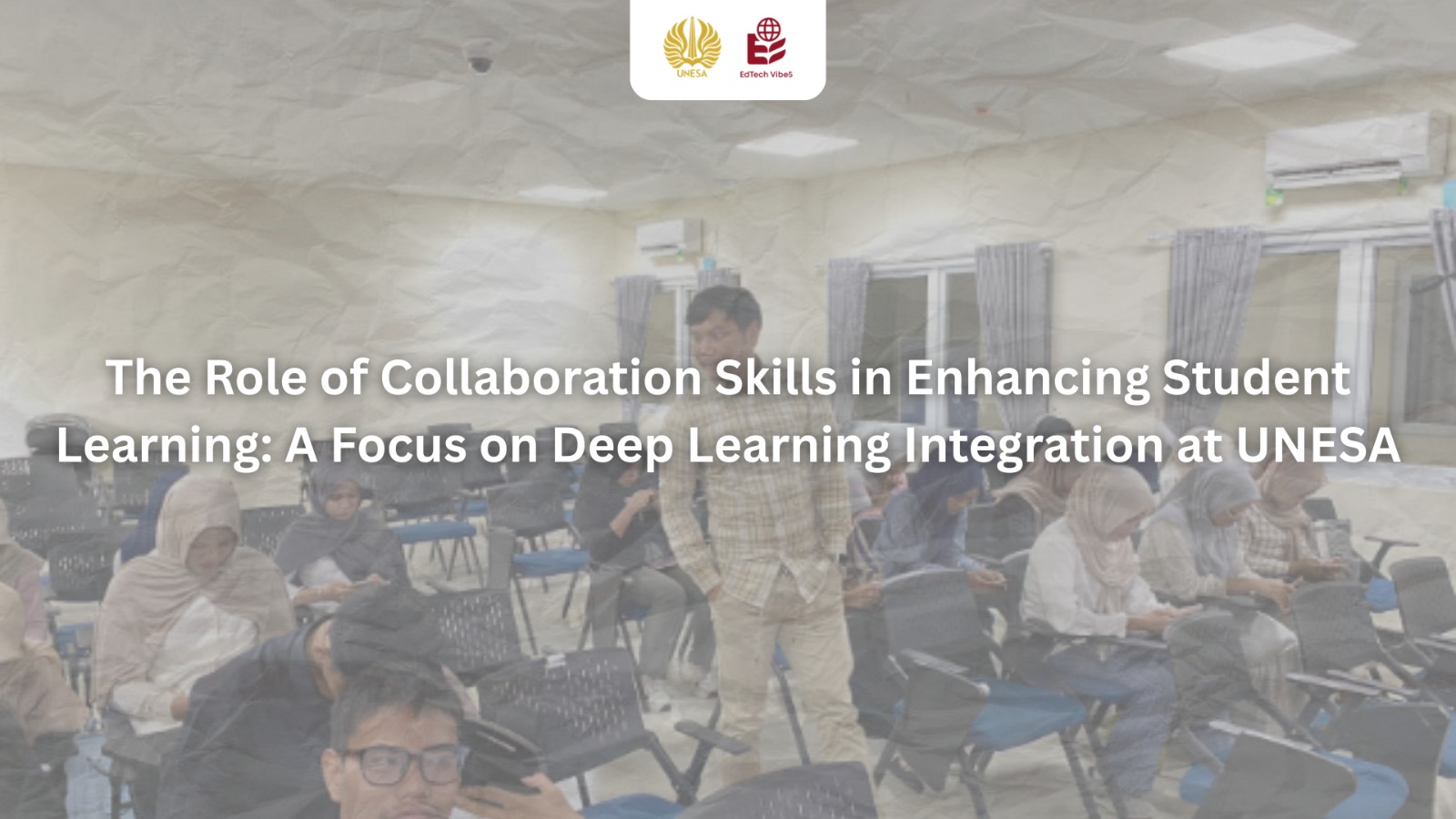
Magetan, Indonesia – November 2025 In the ever-evolving landscape of education, the importance of collaboration skills has become increasingly evident, especially in the context of preparing students for the challenges of the 21st century. At Universitas Negeri Surabaya (UNESA), a recent initiative by Adhitya Amarulloh, a lecturer in the Department of Educational Technology, highlights the vital role of collaboration in academic success and future workplace performance. His research emphasizes how collaboration skills can transform student learning experiences, particularly through the implementation of Deep Learning methodologies in the Ilmu Pendidikan (Education Science) course.
As education systems worldwide face pressure to adapt to new demands for critical thinking, problem-solving, and teamwork, the ability to collaborate effectively is increasingly recognized as a core competency. However, at UNESA, it was observed that many students were struggling with collaborative learning, often working in isolation despite being tasked with group assignments and collaborative projects. This gap led to the formulation of a research-driven approach aimed at improving these skills through a more interactive, engaging, and reflective form of teaching.
"Collaboration is not just about working together; it's about engaging with diverse perspectives, exchanging ideas, and developing the social and cognitive skills needed to thrive in professional environments," said Adhitya Amarulloh. His research revealed that while students often excel individually, they tend to underperform in collaborative settings, primarily due to limited opportunities for meaningful interaction and feedback within traditional learning frameworks.
The research model integrated Deep Learning with an emphasis on collaboration, using tools such as peer feedback, group discussions, and problem-based learning. Deep Learning, in this context, goes beyond rote memorization to foster a deeper understanding of material, encouraging students to engage actively with the content and their peers.
The results of the study were promising. Through the structured activities designed to enhance collaboration, students demonstrated significant improvements in their ability to work effectively in teams, communicate ideas clearly, and tackle complex problems. Pre-test and post-test evaluations revealed a marked increase in students' self-reported collaboration skills, with many noting that the collaborative exercises helped them grasp difficult concepts more effectively by learning from peers and exchanging diverse viewpoints.
One of the key findings from the research is the impact of collaborative skills on critical thinking. Students reported that working in groups enabled them to develop more sophisticated arguments, better analyze issues from multiple angles, and engage in reflective thinking. This process not only deepened their understanding of the course material but also prepared them for real-world challenges where collaboration is essential for success.
The research also identified that collaboration skills contribute significantly to enhanced motivation. Students who participated in the collaborative learning model reported higher levels of engagement and enthusiasm in their studies. "When you're working with others, you feel more accountable and motivated to contribute, which pushes you to perform at your best," shared one of the students involved in the research.
Future workplace demands, which increasingly require employees to work collaboratively across disciplines and with diverse teams, make the development of collaboration skills a top priority for higher education institutions. Adhitya’s findings underscore the importance of creating learning environments that not only foster knowledge acquisition but also prepare students for the collaborative nature of modern professional settings.
The integration of Deep Learning into UNESA's curriculum is a step towards creating a more collaborative and impactful educational experience. This research suggests that fostering collaboration skills through active, problem-solving, and peer-feedback-based learning not only enhances academic performance but also better prepares students for the demands of the workforce.
As UNESA continues to innovate in its teaching methodologies, the emphasis on collaboration is poised to play a key role in shaping future graduates who are equipped with the critical thinking, teamwork, and communication skills necessary for success in today's interconnected world.
